
It’s usually easy to find a dirndl for your daughter—but with boys, things often get more complicated. A traditional costume or just a vest? Which age group suits which outfit? And what actually makes for a good traditional costume button detail? We’re bringing some structure to boys’ traditional outfits—practical, suitable for everyday wear, and with just the right amount of traditional charm.
What’s included in a traditional outfit for boys?
A complete traditional costume for children classically consists of just a few, clearly defined pieces:
- 🧥 The traditional jacket or “Janker”: The centerpiece, usually featuring a notched collar and the typical color contrasts on the cuffs and button placket.
- 👖 Traditional pants or lederhosen: Shorts or knee-length pants, depending on age and season.
- 👔 The traditional shirt: Usually checkered or in muted colors, worn under the jacket or vest.
- 🦌 The traditional buttons: Small but crucial—more on that in a moment.
- 👞 The shoes: Sturdy, durable shoes instead of sneakers, so the look stays put even when the child is running around.
For younger children, a traditional outfit consisting of a cardigan or sweater and pants is often sufficient—the full traditional suit is usually only worth the investment when the child actually wears it to a celebration or at Oktoberfest.
Traditional Costume Buttons: The Detail That Makes All the Difference 🦌

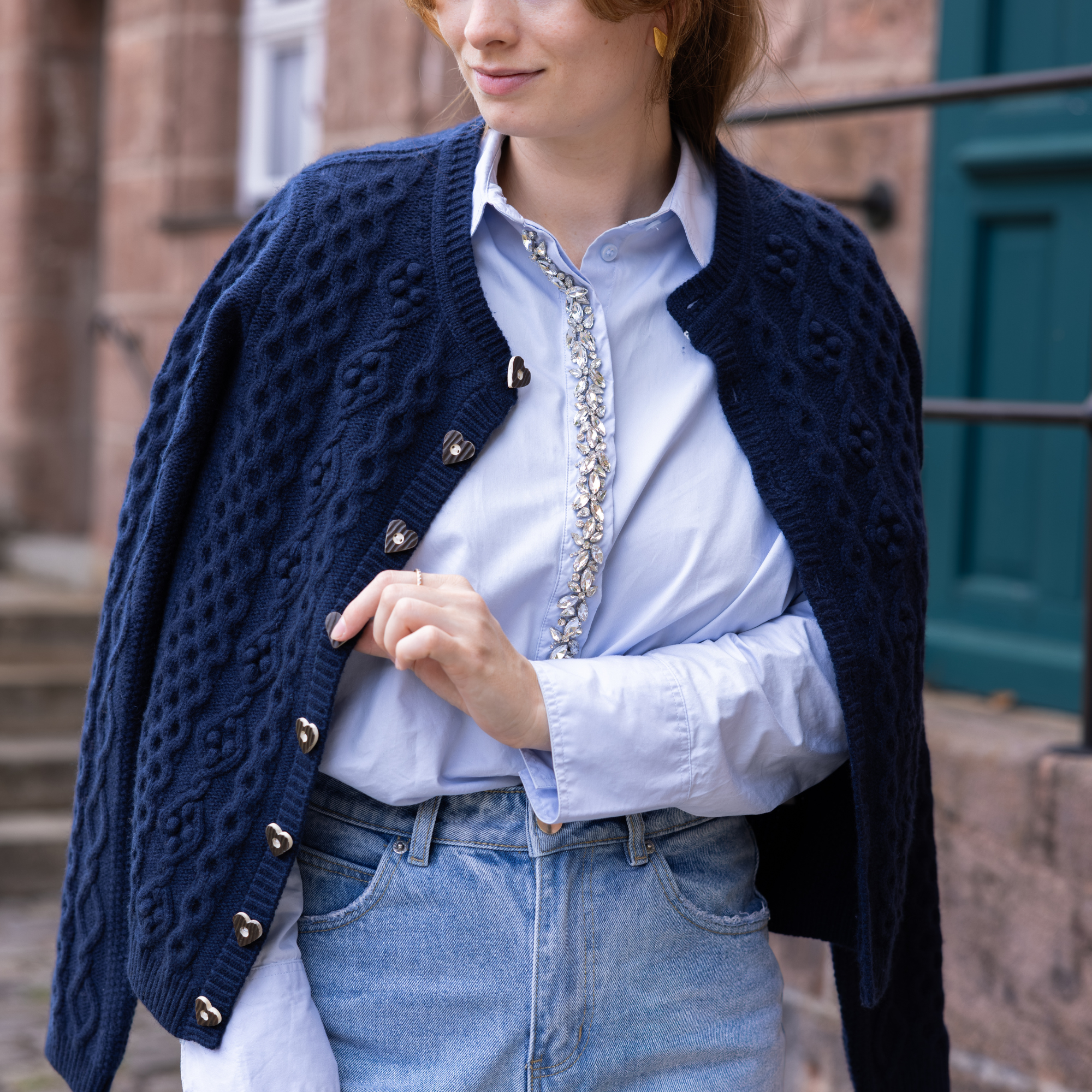
Hardly any detail is as characteristic of a good children’s traditional outfit as the buttons. Traditionally, traditional outfit buttons are made from deer antler or natural materials—making each button a unique little piece with its own grain.
You can often tell a high-quality traditional garment by its buttons: natural materials instead of plastic, neatly sewn on instead of glued—that’s the difference between an authentic traditional garment and a mere costume.
With sweaters and cardigans, the buttons are also under constant strain—an active child pulls, tugs, and crawls. Firmly sewn-on, high-quality buttons can withstand this daily wear and tear without coming loose after just the second wash.
Starting at what age? From traditional outfits for babies to big boys 👶🧒
Children’s traditional attire grows with them in clear stages:
Baby (0–12 months): A traditional bodysuit or a small traditional cardigan is all you need—as long as it’s soft, with no constricting seams or sharp embellishments against a baby’s sensitive skin.
Toddler (1–4 years): Now it’s time for the first little traditional outfit—usually a practical set consisting of a cardigan and pants, so getting dressed and undressed remains easy.
Preschool & elementary school age (4–10 years): The complete look with a jacket, shirt, and pants comes into play, often complemented by a small vest for a festive look.
Older boys: The traditional outfit becomes more detailed—this is where high-quality material really pays off, because it grows with the child and is worn for several seasons, rather than disappearing into the closet after one Oktoberfest.

Why Cashmere Really Makes Sense for Children’s Traditional Attire ☁️
Traditional children’s clothing must withstand one thing above all else: a child’s everyday life. This is exactly where it becomes clear why fabric is about more than just price.
- 🤍 No itchiness: Cashmere doesn’t irritate the skin—which is important when the traditional shirt sits right against the neck.
- 🌡️ Warmth without the weight: Especially at a chilly Oktoberfest or during a fall parish fair parade, cashmere keeps children warm without restricting their natural urge to move.
- 🔁 Durability: With proper care, a cashmere traditional cardigan will last through several traditional costume seasons—even as the child grows, the piece remains a worthwhile investment, perhaps to be passed down to a younger sibling.
How to style the look just right 🎯
For Oktoberfest: A traditional jacket or vest over a shirt, paired with short leather pants—comfortable for a long day of activity.
For the parish fair or parade: The full traditional outfit with knee-length pants looks more festive and keeps you extra warm in cooler weather.
For a wedding or baptism with close family: An elegant traditional cardigan instead of a Janker looks less like a costume and adapts more easily to a more subdued occasion.
A little style tip: If Mom wears a traditional outfit without a dirndl, a color-coordinated traditional jacket on her son creates the look of a deliberately chosen family ensemble—without everyone having to wear the exact same outfit.
Care: To ensure the children’s traditional attire lasts through the next season 🧺
Children’s traditional attire gets crumpled, sat on, and carried through the beer garden—so being easy to care for isn’t just a nice-to-have. For cashmere traditional attire pieces, the same simple rule applies as for any other cashmere item: Wool cycle, max. 30 °C, mild wool detergent, dry flat instead of hanging. This way, the traditional jacket will still make it through the next season, even if it ends up in the mud along the way.

Small, but with authentic traditional charm
A good traditional costume for boys doesn’t have to be a formal outfit—it should simply be able to keep up: while running, sitting on a beer bench, or running around after the festival. With the right materials and a few authentic details like stag-horn traditional buttons, this festive outfit becomes a piece your son will love to wear—and one that will last more than one season.
Frequently Asked Questions – Traditional Attire for Boys ❓
At what age can you start dressing a baby in traditional attire?
Starting in the first few months—ideally in the form of a soft traditional bodysuit or a small cardigan without restrictive seams. A complete traditional outfit is usually only worth it once a child is a toddler.
What’s included in a classic traditional outfit for boys?
A traditional jacket or vest, a shirt, short or long traditional pants, as well as matching buttons and sturdy shoes. For younger children, a simpler set consisting of a cardigan and pants is often sufficient.
How can you tell if traditional costume buttons are high-quality?
By genuine natural materials like deer antler instead of plastic, and by clean, sturdy stitching. This is especially important for children’s clothing because the buttons are subjected to heavy wear and tear in everyday use.
Is cashmere too delicate for everyday use in children’s traditional costumes?
No—when properly cared for, cashmere is actually particularly durable and feels more comfortable against the skin than coarser wool. The key is to use the wool cycle at a maximum of 30 °C instead of the standard hot wash.
How many times a year can children’s traditional clothing be worn before it becomes too small?
That depends on growth spurts, but high-quality, well-fitting pieces often last an entire season. After that, they’re frequently still suitable to pass down to a younger sibling.